

All About Real Augmented Reality Glasses!
The future is no longer a sci-fi fantasy. Real augmented reality (AR) glasses are here, and they are changing how we see and interact with the world. At DrTechZen, we have been following new technology for years, and AR glasses are finally moving from their experimental phase to real-life use. Let’s explore what they are, how they work, and why they matter so much.
What Are AR Glasses?
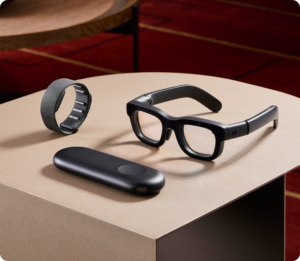
Augmented reality glasses are wearable devices that place digital content, such as images, information, or holograms, on top of the real world. Unlike virtual reality (VR), which immerses users in a completely digital environment, AR improves your actual surroundings with interactive features.
The next wave of AR glasses goes beyond just eyewear. It includes AI-powered wristbands and connectionless computing. Instead of depending on phones or cloud servers, upcoming AR systems are designed to run completely on-device. A smart wristband serves as a control hub. It senses hand gestures, biometric data, and even subtle nerve signals to interact with digital elements. When combined with the local processing power in the glasses, this setup allows for privacy-focused, low-latency AR. There’s no tethering and no lag. Companies like Meta and Apple are exploring this integrated wearable ecosystem. This points toward a future where AR is lightweight, responsive, and truly mobile.
Imagine walking down a street and seeing restaurant reviews appear above storefronts. Picture getting real-time translations of signs while traveling or watching 3D blueprints on a construction site. That’s the power of AR glasses.
How Do They Work?
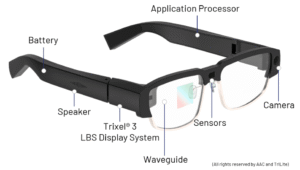
At the center of AR glasses is a mix of hardware and software that creates immersive, interactive experiences. The main components include:
Display Technology: Usually, a small projector or microLED display built into the lens projects images onto your field of view.
Sensors & Cameras: These detect motion, depth, and the surrounding environment to ensure the digital content fits with the physical world.
Connectivity: Most AR glasses link to smartphones or cloud systems for processing power and data.
Voice & Gesture Controls: Many models come with microphones for voice commands and touchpads or hand-tracking for control.
The result is a smooth integration of digital content into your real-world perspective, without needing a phone in hand.
Applications Across Industries

AR glasses are changing how we live and work. Here’s how:
Healthcare: Surgeons can see anatomy in 3D during procedures. This improves precision.
Retail: Virtual try-ons and real-time product information improve customer experiences.
Education & Training: AR allows immersive learning, from medical simulations to mechanic training.
Remote Work & Collaboration: Virtual screens, whiteboards, and avatars make working together more interactive.
And this is just the beginning.
Challenges and The Road Ahead

Despite the hype, AR glasses face challenges.
Battery Life: Powering sensors and displays in a small size is tough.
Privacy Concerns: Cameras and real-time data capture raise ethical questions.
Content Ecosystem: Developers need better tools and standards to create meaningful AR experiences.
Still, the momentum is strong. With AI, 5G, and cloud computing driving the next generation of AR, we are likely to see even more compact, stylish, and functional glasses in the next 2 to 3 years.
Final Thoughts
Real AR glasses are not just gadgets. They are powerful tools that will change how we interact with the digital and physical worlds. Whether you are a developer, business owner, or tech enthusiast, now is the time to pay attention.
Stay tuned to DrTechZen as we explore the changing world of augmented reality. The future is literally in front of your eyes.